
Guide
Voice message translation for couples across a language gap
When you're dating — or building a life with — someone who speaks a different language, most of the relationship happens in small daily voice notes. Here's how to keep that natural, in both your own languages.
Why text translation isn't quite enough
Typing into a translator works for logistics — "call me at 8," "did you eat." But a lot of what makes a relationship feel close isn't the words alone, it's hearing them: tone, warmth, the little pause before someone says something they mean. Voice notes carry that. A translated wall of text doesn't.
That's the specific gap ReplyLingo is built for — not replacing how you already talk to each other, just removing the language barrier from it.
How it fits into an actual daily routine
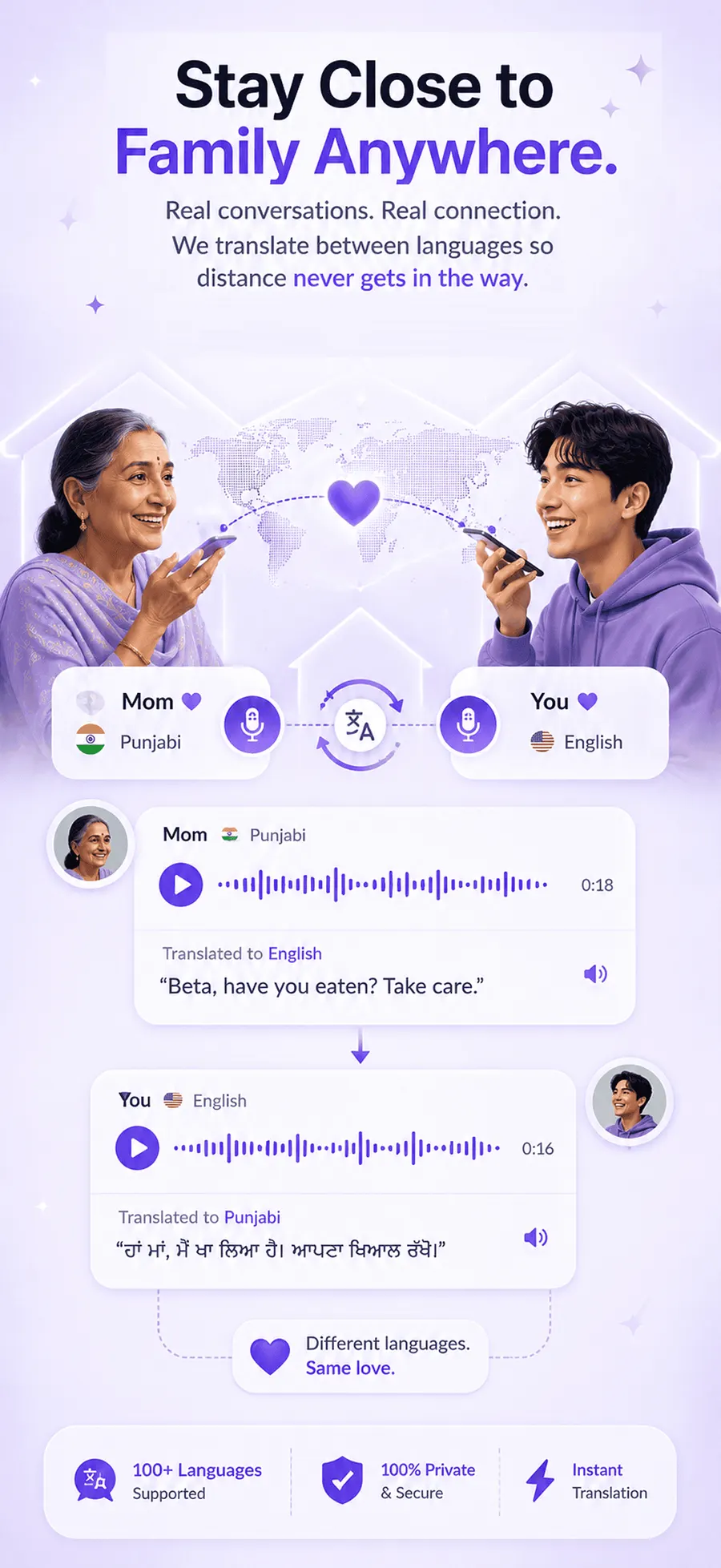
- They send a voice note in their language, like they always do.
- You share it into ReplyLingo — it's transcribed, translated, and read back to you in seconds.
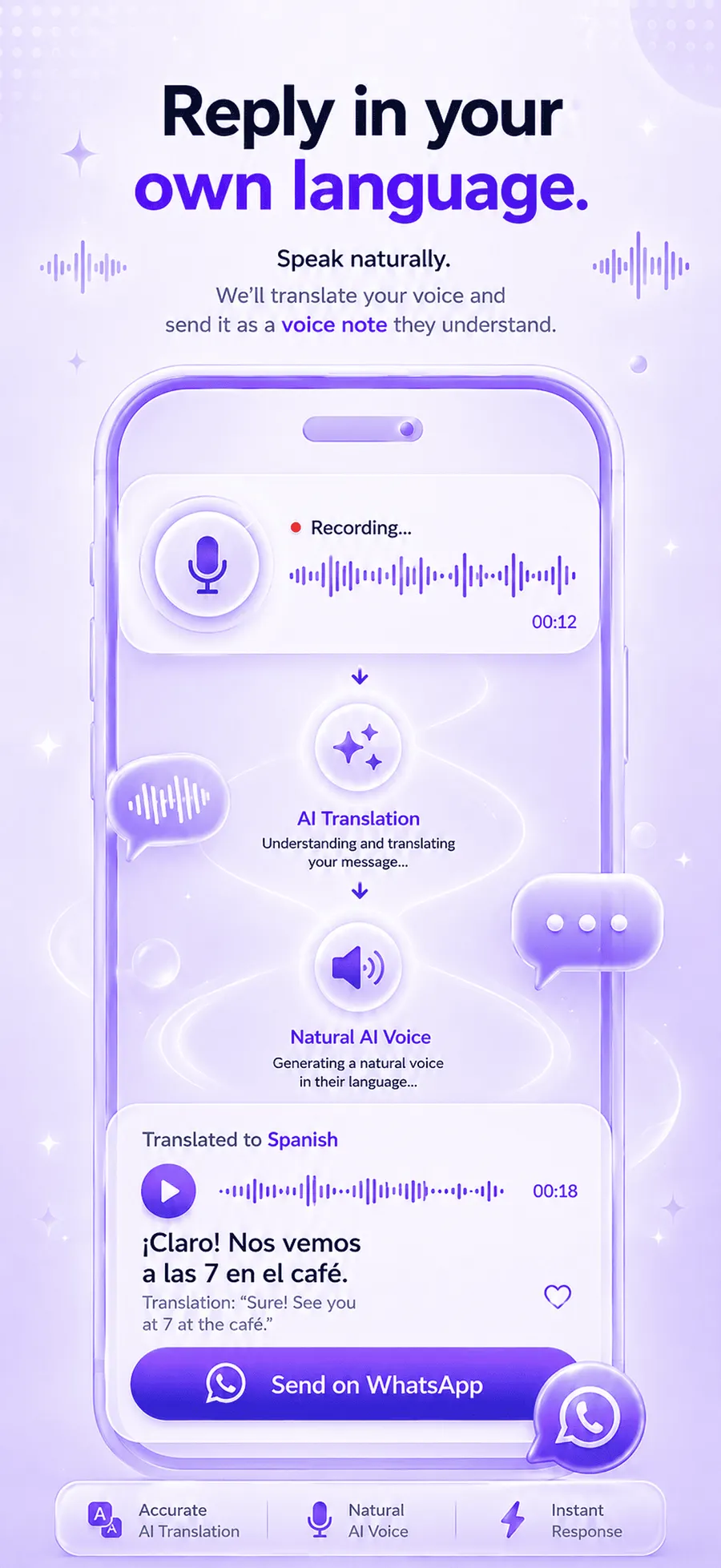
- You record your reply in your own language, out loud, the way you'd normally talk to them.
- ReplyLingo translates it and speaks it back in their language, then hands it to your phone's share sheet to send however you normally message — WhatsApp, Telegram, whatever you already use.
Nobody has to switch languages, type a message they're not comfortable writing, or wait for the other person to be free for a video call. It fits into the exact rhythm a long-distance or cross-language relationship already runs on.
What this isn't
To be upfront: ReplyLingo translates voice messages, not live phone or video calls in real time. If your relationship runs mostly on scheduled video calls, a live-conversation translator is a better fit for that specific moment. If it runs on voice notes sent throughout the day — which is how most messaging apps actually get used — this is built for exactly that.
Frequently Asked Questions
Say it once. It arrives in their language.
Free to start. No sign-up needed. Continue as a guest.