
Guide
Stay close to family, even across a language gap
A parent, grandparent or relative abroad who sends voice notes in a language you don't fully speak — here's how to keep that relationship close, in both your own languages.
A very common gap in immigrant and diaspora families
It's a familiar shape: grandparents or parents who speak mostly their first language, and kids or grandkids who grew up speaking mostly another one. Nobody is fluent enough in the other's language for a real conversation — but everyone still sends voice notes, because that's genuinely how the relationship happens day to day.
Typing into a text translator works for short logistics, but it strips out the thing that actually matters in a family voice note — hearing your mother's or grandfather's actual voice, tone and warmth, not a wall of translated text.
How it fits into an actual family routine
- They send a voice note the way they always do — no new app, no change on their end.
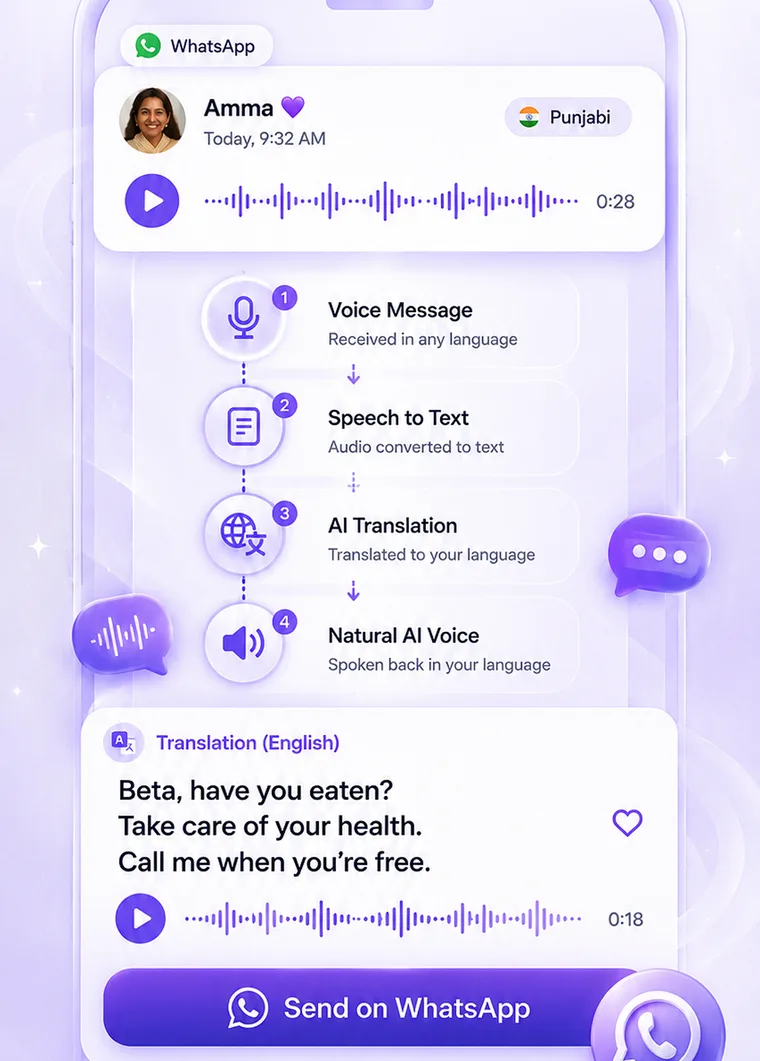
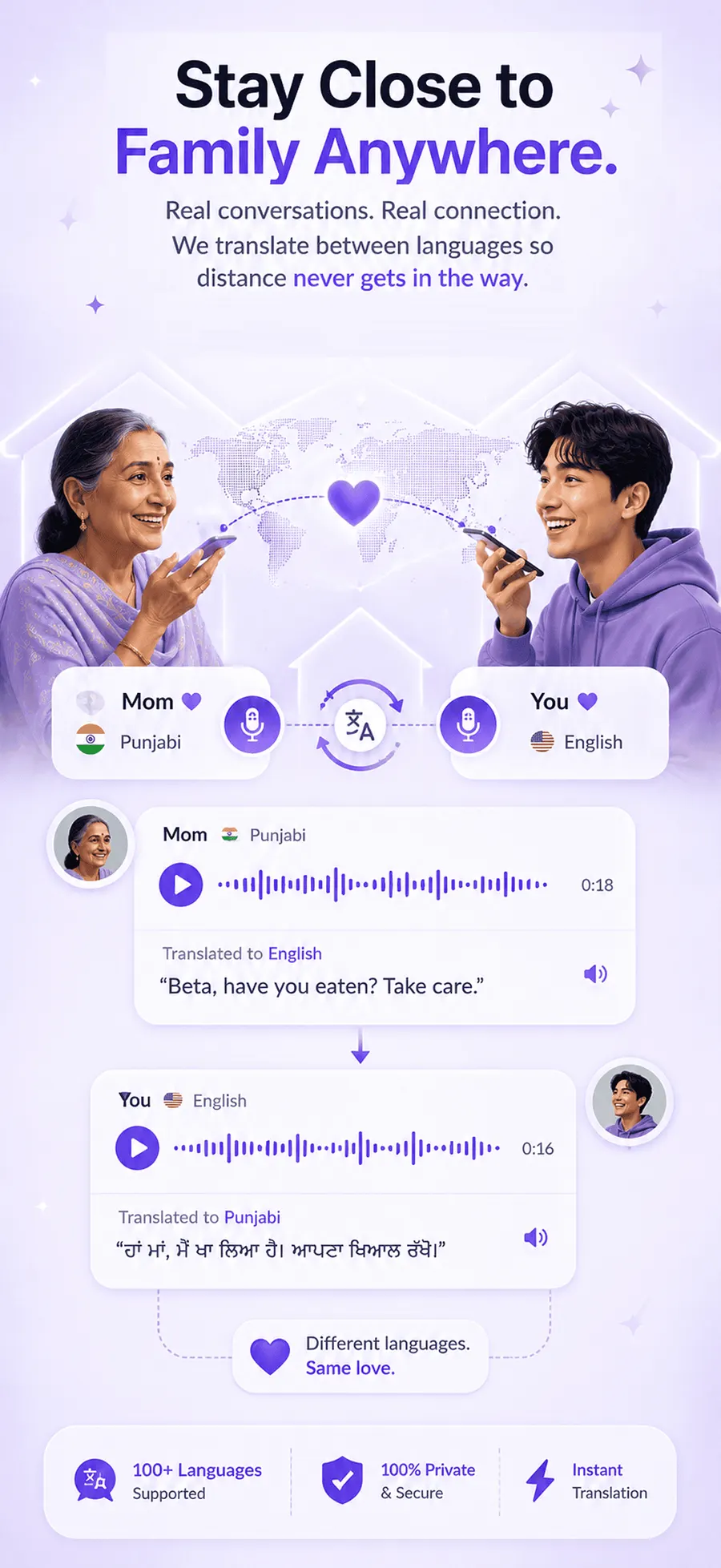
- You share it into ReplyLingo — it's transcribed, translated, and read back to you in seconds.
- You record your reply in your own language, out loud, the way you'd naturally talk to them.
- ReplyLingo translates it and speaks it back in their language, then hands it to your phone's share sheet to send on WhatsApp like normal.
What about languages WhatsApp doesn't even transcribe?
WhatsApp's own Voice Message Transcripts feature only supports a short list of languages — Punjabi, for example, isn't covered at all, and coverage differs between iPhone and Android for the languages it does support. And even where it works, transcription just turns speech into text in the same language — it still doesn't translate. Families speaking Punjabi, Tagalog, or dozens of other widely spoken languages get nothing from WhatsApp's built-in feature. ReplyLingo covers 100+ languages either way, because it's built to translate, not just transcribe.
It's not about replacing how your family talks
Nobody has to switch how they communicate — your parents or grandparents keep sending voice notes exactly as they do now. ReplyLingo just removes the one thing standing between you: the language itself.
Frequently Asked Questions
Say it once. It arrives in their language.
Free to start. No account required.